
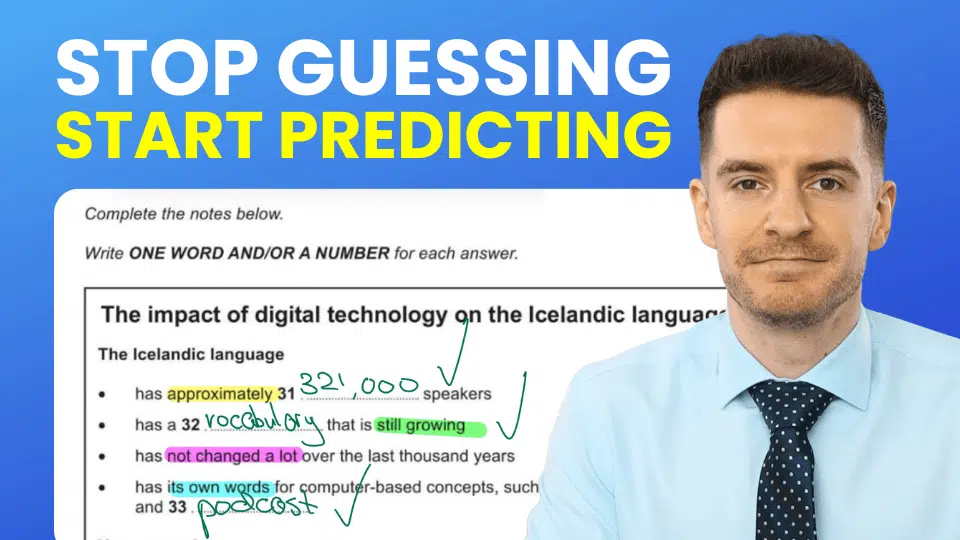
IELTS General Training Reading Section 2 Practice (Full Strategy)
In this lesson:
✅ Section 2 Practice with Answers for IELTS General Training
✅ How to answer different question types
✅ Common mistakes to avoid
✅ Tips and tricks
✅ Strategies for question types
✅ How to answer different question types
✅ Common mistakes to avoid
✅ Tips and tricks
✅ Strategies for question types
Full transcript
Section two in the general training reading test is a little bit different than section one. The section two. You normally have to read texts related to the workplace. So for example, something like a company policy. In this second video, in this three part series, we’re going to look at section two for the general training reading test. I’m going to show you how to answer the questions as quickly as possible, and how to avoid common mistakes that may reduce your band score.
Now, please note even if you’re doing the academic version of IELTS, this video is still going to be very useful for you because a lot of the strategies in question types are exactly the same. And if you are preparing for IELTS, make sure you check out our preparation course in the description below. Because it’s going to teach you everything you need to know to get a band seven or higher in every single part.
All right, let’s have a look at our reading section two. All right. So on the screen right now you can see the first text for section two. Let’s have a read. So section two questions 15 to 27. Read the text below and answer questions 15 to 22 personal protective equipment. So like I said before, remember that section two will have texts related to the workplace.
Now, there’s no reason to skim the text, so we can just go straight down to the questions for this one. Here they are. Questions 15 to 22. Complete the notes below. Choose no more than two words from the text. That’s important as well from the text for each answer. So of course this is really important. Okay. No more than two words.
So that means you can use one word for example cat. That’s fine. You could use two words read cat. That is also fine. But you cannot use three words okay. Because it says no more than, two words. Write your answers in boxes 15 to 22 on your answer sheet. Okay. Pretty simple. So when you get something like this, we, note completion questions.
You should always try to predict the answers. Always try to guess what part of speech will go in the, gap. So let’s very quickly do that here. So have are after are we would need a noun may have something for or after have we normally have a noun as well. So for example have water have a dog have this have that may need to be inspected by a k noun again.
And note here with this one here, and both of these will be singular nouns, because after we can only have a singular noun. For example, a dog, a cat, a bird. Let’s keep going. So number 18. Now check for possible something. So after possible it could be a noun because possible is an adjective.
Number 19 allows a sorry allow work two or after the word two we normally have a verb. Number 20. Use something to stop. Well, again it’s probably going to be a noun and is probably going to be a plural noun or an uncountable noun, because if it was going to be a singular noun, it would need to have are.
But there is no are. There? Let’s go to 21. Well, we’ve got okay. So that’s a noun or that will be a noun again may cause something. Well, something is a noun. So that will be a noun as well. And again this one will probably be a plural noun. All right. So let’s go back up to number 15.
So when you doing these ones here. Make sure you always read the subheading because it can help to show you where to look and where not to look. So it says must be of high quality. For example have a something on them. Have a something on them. So this personal protective equipment must have a something on them. So we’re looking for a noun on the personal protective equipment.
So let’s quickly have a read and see if we can find out. When used correctly personal protective equipment okay. We can highlight that helps reduce the risk of injury okay. Items are there. Okay. So they’re just giving us some examples of different personal protective equipment. All personal protective equipment should be made, to a high standard. Remember it was talking about high quality.
So now we know that this is probably where the answer is going to be located. Good condition. Some items carry an official label. That could be the answer to show they meet approved safety requirements. These products include instructions that are. Yes, a label looks like the correct answer. So if something carries a label, that means there’s a label on it and that’s what it says down in the questions, have a something on them.
So we can write the words label in there and just check the grammar. Have a label. Well that looks good. So let’s move on to question 16. So question 16 says may have something for pre use equipment checks. So again we’re looking for something. We’re looking for a noun. So let’s go back up and we’ll keep reading from where we found the last answer to show you did it.
These products often include. So let me just highlight that these products include, they got instructions on how to carry out checks, before they are worn. Remember it was talking before about, I can’t remember what it said. Pre something checks. So let’s have a look. What could the noun be here? These products often include instructions.
Okay. So it looks like instructions will probably be the answer there. But let’s just keep reading ahead. Just just to check some cases for protection gear breathing masks. Safety officer yeah. So it looks like instructions will be the correct answer. So let’s quickly write that in there instruc tions. And again always quickly read the full sentence or full note just to check that it makes sense.
May have instructions for pre usage equipment checks. Yes. That looks good. It makes sense. So we can move on to the next one. Now the next one says may need to be inspected by R k by R. So it’s probably talking about a person. So let’s have a look and see if we can find the personal protective equipment needs to be inspected or checked.
And that’s another thing that’s important when you’re thinking about each question you need to be thinking about synonyms. So for example if we look at the word inspect well another word that comes to my mind for or when I think about inspect is check. So let’s have a look. Because remember that’s the words in the question. And the words in the text will normally be different.
Because if they were the same, obviously it would be very easy to find the answers. So let’s keep going from where we found the last answer. Some cases, such as fall protection okay. Oh sorry. In some cases sorry. Such as with fall protection. It up. A safety officer must check. Okay, there we go. Must check the equipment to ensure it remains safe to use.
So, who is doing the checks? Well, it’s very clear. It says, safety officer. So safety officer looks like the right answer. Again, let’s just quickly read ahead to see if there’s anything else. Safety plan. No. So safety officer will be the answer there. So let’s go down and put that in safety officer. And remember always think about the instructions.
What do the instructions say. No more than two words. Well we’re following the instructions there. Safety is one and officer is two. So that is fine. And again always just quickly check. So may need to be inspected by a safety officer. That looks fine. That looks correct. And it’s got correct grammar. So let’s move on to the next bit.
Now which is safety plan. And I just remember before we saw the two words safety plan. So should be done with tasks that need PPE. Okay. Check for possible or potential. Or maybe something before choosing the right equipment. So we need to think about checking something for possible and then before. So let’s go back up there and see if we can find it.
So again we’ll start reading from here before starting tasks that require PPE, a safety plan, a k safety plan. This includes carrying out an assessment in which any potential hazards okay. Remember potential has a similar meaning to what it said. Down before and then it says hazards. So that could be the answer. Once those hazards have been reviewed the correct equipment can be select added.
Yeah. Because remember it said you need to check for something before you can choose, the correct equipment. So hazards looks like the answer there. So let’s go back down and put that into the answers. Check for possible something. Yeah okay. Check for hazards. Check for dangers before you choose the right equipment. And again it makes sense okay.
Possible hazards. We’ve got. That’s as well if we just say check for possible hazard. Well the grammar would be not correct. So this would be incorrect. So always remember. Think about your s and just something else. As you remember the instructions say choose words from the text. So in the text there is an s. So that means down here when you write your answer you also need an s.
Okay let’s move on to the next one now sorry. Which is safety briefings. So these briefings allow workers to something what they need to do. So looking for safety workers, sorry. Safety briefings. And these briefings allow workers to do something, okay? They allow workers to something. What they need to do. So let’s go back up and we’ll see if we can find those meetings.
In many workplaces, the plan is also discussed with staff. Okay. Sometimes go are there we go safety briefing. So we can highlight that where workers can clarify their responsibilities to ensure they are fully aware of what each tasks task involves. So if you remember, the safety briefings, allow workers to do something to make sure they know what they need to do so their responsibilities and what each task involves.
So remember for this one we were looking for a verb. So if we look here, what verb would be the answer? Well looks like clarifai would be the answer. There. So if we go back down, let’s put that in the space safety briefings allow workers to clarify what they need to do. It’s a verb. It’s following the instructions.
And it makes sense. So that looks good. Let’s keep going. So the next heading is avoiding injury. Use something to stop people going into the area. Okay. So we’re looking for a noun. And again is probably a plural noun. To stop people going into an area. Let’s see if we can find it. So when working in dangerous areas okay.
So avoiding injuries. That was the heading for the subheading. First, when there is a risk of falling objects or debris, workers must wear. Okay. The area should be clearly marked with barriers, to keep others out. Second, in places where harmful. Okay, so remember we’re looking for a plural noun. And remember the question was talking about to stop people from going to a place.
And looks like that could be the answer there. Barriers. Now you might be thinking, well, what about helmets? Well, yes, helmets would fit, but helmets wouldn’t make sense because the helmets are not keeping others out. No, it’s the barriers that are keeping others out. So that’s another thing to be really careful about. Even though an answer might fit, it might not be correct because it doesn’t answer the question or it doesn’t make sense.
So always think about that. And remember, don’t just choose the first answer that you see. So use barriers to stop people going into the area. Looks good. All right, let’s move on to the next one. Have a something around to make sure everything is being done correctly. So remember we’re looking for a noun and it’s so we’re looking for one thing.
We need to have something or someone around maybe in that area. Why? To make sure everything is being done correctly. So let’s go back up and see if we can find that. So second, in places where harmful to the staff, we must wear okay. Protect themselves. Finally a supervisor. Okay, this could be the answer because remember, we’re looking for a person or a thing should always be present that has a similar meaning to around to check.
That everyone has the right gear, ensure that safety rules are being followed at all times. So it looks like supervisor would be the answer because the supervisor is present or is around, and what are they doing? Well, they’re checking things and they’re ensuring that every, you know, safety rule is being followed at all times.
So that looks very similar to what the note said here. So you have a supervisor supervisor around to make sure everything is being done correctly. That looks good. The grammar looks good. And we’re following the instructions. So that will definitely be the answer. Now let’s move on to the last subheading. Now small parts straps, buckles, etc. may cause.
So this is interesting because it’s giving us some examples. Straps buckles these parts may cause something may lead to something, may result in something. So we’ve got to look for those things. And we’ve got to think about what might those things cause. What might the result be. All of those things. All right. So let’s go back up and we’ll have a look and see if we can find it.
So serious injuries okay. Fair enough. Of the, smaller parts. There we go. So smaller parts, straps, buckles, fastenings, play a key role in protection. Okay. So remember, we’re looking for the result. Let’s let’s keep going. A crack strap or a fastening can lead to. Can lead to is another way to to talk about a result. Serious accidents.
Even when the main equipment appears to be in good condition for this reason. Did it is it So it looks like accidents would be the answer there, because look what it says. The strap or the fastening can lead to. Okay, what’s the result of that? Well, the result is accidents. So let’s have a look. May cause accidents.
And if we look at the grammar there it looks good. May cause accidents. We’ve got our s. So that is the answer. It makes sense. And the grammar is correct. Now that’s the first text for section two. Remember in section two there are two texts that you need to read. So don’t forget that and go on to section three okay.
We need to go down to the second section. And here it is right here. So let’s get started. Read the text below and answer questions 23 to 27. Pretty simple. Here’s the title dealing with Difficult Customers. So again the text is related to the workplace. So again there’s no real reason to skim this. It’s pretty short so there’s no reason to skim.
So let’s go down to the questions now. Questions 23 to 27. Complete the table below. Choose one word only from the text for each answer. Write your answers in boxes 23 to 27 on your answer sheet. Now remember, with the last, text up above, that was two words only. This one here is one word only. Okay, so be very careful of that.
Always read the instructions. And again look what it says from the text day from the text. So you just look at the text up here. Let’s pretend you think this is the correct answer. Avoid. Well, you put that as your answer. Okay. Just take the word from the text. So let’s have a look at this table. Right here.
When you’re doing a table okay. You need to obviously start with the heading. So have a quick look. Strategies for handling difficult customers. And then have a look at the columns. Okay. We’ve got the strategy. Your response. The customer. Then you simply look at each question one by one. Okay. So the first one don’t take it personally. Remember it’s nothing personal okay.
Do not try to do something with the customer. So just like the, previous questions up here where we predicted the part of speech, you can do the same thing here, and you can do them all before you, start looking for the questions. Or alternatively, you can do them. When you do each question, it’s up to you.
Just do what’s best for you. You’re okay. Always do what’s best for you. Don’t follow what other people tell you. So let’s look at 23. Do not try to. Well we’ve got two. So after two we will normally have a verb. Okay. So what we’ll do this time we’ll just do them one by one. Will predict the part of speech one by one.
So let’s have a look. Do not try to do something with the customer. And remember we’re looking for this strategy here. Okay. Don’t take it personally. So let’s go back up and we’ll see if we can find that strategy. And we’ll see if we can find where it talks about. Don’t try to do something to the customer or with the customer.
So let’s start from the very top. When a customer becomes difficult there’s a reason okay. Below are some strategies that I done. Okay. So when a customer becomes aggressive or rude it’s important to remember their behavior. Okay. Not a personal attack. That was one of the first dot points that we read. So we know that this is probably where the answer is.
And remember, we’re looking for something we shouldn’t do. Okay. So trying to argue or prove a point usually makes things worse. Well, that looks good right there. Okay. It’s saying it’s it’s not using the same words and saying do not try to, argue, but it’s saying it in a different way. So that looks like the, correct answer.
But always just quickly have a, read of the text afterwards. So the customer may be frustrated. Income. Okay. So yeah, it looks like Oggy would be the correct answer there. So let’s go back down here and put it in. Do not try to argue with the customer. So it’s a verb. We’re following the instructions and it makes sense.
Now you might be thinking. Well Shane, up above there was the word prove. Why is prove not the answer? Well, if you put proving there, it doesn’t make sense. Do not try to prove with the customer it doesn’t make sense. So that’s why prove would not be the answer. Now let’s move on to the next question, which is 24 and 24 is about the customer now.
So the customer feels something about something. So this one should be pretty simple because we’re looking for a feeling. How does the customer feel. And it’s probably very close to argue. So let’s go back up and we’ll see if we can find how the customer feels. So the customer may be. So let me highlight that customer may be there you go.
Frustrated due to a problem with a product delay or poor service. Staying calm allows you. Okay, so now it’s talking about you, not the customer. So how does the customer feel? Well, it’s pretty clear the customer feels frustrated. So let’s go back down and put that in and see if it works for us. Try to read. So probably feels frustrated about something that looks very good.
It makes sense. And, the grammar is correct. Let’s keep going. Okay. So the next strategy listen without interruption. Okay. So the customer probably won’t listen to. So remember after we need a noun. And it’s a singular noun as well. Until they are calm. So let’s go back up. Remember we’re looking for the second strategy. And the customer probably won’t listen to something until they are calm.
So let’s have a look. Allow the customer to speak. Okay. So use short natural response. Sorry. Neutral responses. There we go. Stay silent and listen. If the customer. There we go. Sees that you are not reacting emotionally, they may begin to calm down. This step is important before K, before they are ready to hear, any solution you offer.
So that looks like the correct answer there. Solution k so you need to, not react emotionally. The customer might calm down. And then after that they might listen to your solution. So let’s have a look and see if that fits. Won’t listen to a solution until they are calm. Yes, that looks correct. It makes sense. The grammar is fine so we can move on.
All right. So the next strategy is ask polite questions. We don’t really need to look at that because as you can see here, there’s no and questions there. So let’s move on to the last one, which is offer a solution. Okay. Remember this is your response. Only give a solution if you know something. If you know something of the business you work for.
So let’s predict the answer 26. After there, we need a noun. Okay. It could be a singular noun, could be a plural noun. But it’s probably going to be a singular. So let’s go back up and have a look. Remember we’re looking for that offering a solution. And we can only do it if we know something. So let’s quickly start here.
Being polite. Memorize phrases like okay this yeah this is talking about step number three which is about asking polite questions. Look asking polite questions. So it’s probably not in this paragraph. So it’s probably here. Take control by explaining clearly what you’re going to do. Okay. It’s important to know. Okay. So this could be where it is what you are allowed to offer under your company’s policy before suggesting any potential, resolution to the customer.
In many cases, a small gesture such as that a. So have a look here. What do we need to know before we can offer a solution? Well, we need to know the company’s policy. We need to know the business’s policy. And that was what it says. It said business. So we can put the word policy in there and just check it, you know, fits grammatically and makes sense.
Only give a solution if you know the policy of the business you work for. Correct that looks good and it makes sense. And this is another example of how in the, text and the question, they will have different words. So here we had business. And then up in the question where is it. We had company. Okay. So always be thinking of synonyms.
So let’s go back and do the last question now. Remember this is about the customer okay. So the customer may leave a good something on the internet. So after we need to have a noun. So we’re looking for a singular noun. And it’s something that the customer might do on the internet. So let’s go back up and see if we can find that.
So let’s start from where we found the previous answer. In many cases, a small gesture that add up these actions can improve customer satisfaction. Okay, so there we go. It’s talking about customers. And lead them or result in them writing a positive review online. There you go. There’s the answer right there. Review. However don’t just choose the first.
And so always read slightly ahead just to check offering something you kind of different. Yeah. So there’s nothing else there that could possibly be the answer. So let’s go back down and puts the answer in review. And let’s check. May leave a good review on the internet. So there you go. Now we have finished text one and text two.
So that was section one. When it’s ready section three will be right here. Or alternatively you can check out section one right here. Thanks for watching. Take care and keep studying hard.


More lessons for you

Free IELTS PDF:
5 Mistakes Stopping You From Band 7+
Learn from an IELTS examiner how to fix these mistakes – plus get weekly IELTS lessons to your inbox.
IELTS Band 7+
Preparation Course 🚀
- Learn strategies for every part
- Get band 7+ fast with our method
- Avoid big mistakes
Improve Your IELTS Speaking in Minutes
Get our eBooks with 100s of common IELTS Speaking questions with band 7+ answers so you know exactly what to say.
Hot Deals 🔥

IELTS Speaking Part 1: Questions and Answers (eBook)
Get 5% off